My Car Failed Smog Check: What to Do Next
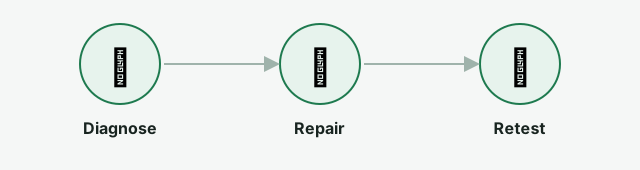
A failed Smog Check isn't the end of the process — it's a diagnostic report telling you what to fix before you can register your vehicle. Here's what actually happens next.
What does the Vehicle Inspection Report tell me?
The station's Vehicle Inspection Report lists which specific test your car failed — commonly emissions levels, the check engine light / OBD system, a gas cap seal, or ignition timing. That detail determines what needs fixing; "failed smog check" alone doesn't tell a mechanic where to start.
| Common failure | What it generally means |
|---|---|
| Emissions levels | Tailpipe readings exceeded the allowed limit for your vehicle's class — often points to an engine or emissions-control issue. |
| Check engine light / OBD | The onboard computer has logged an emissions-related fault, even if the car seems to run fine. |
| Gas cap seal | The cap isn't sealing properly, letting fuel vapors escape — often the cheapest fix on this list. |
| Ignition timing | The engine's spark timing has drifted out of the factory-specified range, affecting how cleanly fuel burns. |
Where should I get it repaired?
If the station that tested your car is a test-and-repair station, it can fix the problem and retest in one visit. If it's test-only, you'll need to take the car to a licensed repair facility (often called a STAR referee or Gross Emitter repair station for the more serious cases) and return for a retest afterward. Either way, keep the original Vehicle Inspection Report — repair shops use it to target the actual failure instead of guessing.
What happens at the retest?
Once repairs are done, the vehicle needs to pass a Smog Check again before registration can be completed. Ask the repair shop or testing station about their specific retest window and any retest fee policy, since these vary by station.
Can I get financial help through CAP?
If a straight repair bill would be a real hardship, California's Consumer Assistance Program offers income-eligible drivers whose vehicle failed a Smog Check either repair assistance or a vehicle-retirement payment as an alternative to fixing an older, higher-polluting car. Eligibility depends on income, how long the vehicle has been continuously registered in California, and the reason for the failure (a bad gas cap or ignition timing alone typically doesn't qualify). Dollar amounts are set by BAR and adjusted over time — check current figures and how to apply at bar.ca.gov/cap rather than relying on a number you saw elsewhere.
What if I think the result was wrong?
BAR maintains a Referee Program for consumers who believe a test result or repair requirement was incorrect. Details on eligibility and how to request a referee review are at bar.ca.gov.
Glossary
- OBD
- On-Board Diagnostics — a vehicle's built-in computer system that monitors emissions-related components and triggers the check engine light when something is out of spec.
- CAP
- Consumer Assistance Program — BAR's income-eligible assistance program offering repair funding or a vehicle-retirement payment for vehicles that failed a Smog Check.
- BAR
- The Bureau of Automotive Repair, the California state agency that licenses smog check stations and sets Smog Check program rules.